Ever walked into a shop, stayed in a holiday cottage, or used a product that looked great… until something small broke the illusion?
That tiny crack, the toilet that doesn’t flush, the confusing website menu, the off-brand interaction, becomes the moment we remember. Because brands aren’t judged by their best moments. They’re judged by the one that breaks the spell.
And that’s exactly where brand lives. Not in logos or taglines, but in the culture and micro-decisions we make every day. It’s the defaults we don’t question. The behaviours we repeat without thinking. The things we choose to fix or ignore.
You might be reading this and thinking about the brands you like, buy, are influenced by or can remember. They are memorable for something, a feeling, a story, a signal. And it’s that signal we want to capture. It’s what we want to be part of.
84% of purchases involve people choosing brands they are already biased towards, meaning long-term brand building matters more than short-term campaigns or conversion tricks. (WPP, How Humans Decide)
Only 16% of sales are open to lower-funnel tactics alone, with long-term brand influence playing the dominant role in decision-making. (WPP)
59% of B2B executives and 58% of B2C/hybrid leaders report gaps in understanding their brand strategy, revealing a major disconnect even at senior levels. (Gartner, 2023)
59% of senior marketers at tech firms are prioritising brand investment to drive revenue, underscoring how brand is now central to business growth. (Gartner)
This article draws on insights shared during Brand Beyond the Logo, a live panel event hosted by Jarrolds in Norwich. The discussion explored how brand values are embedded and experienced beyond visual identity. Speakers included Robert Jones (Brandland), Gareth Newman (Blakely), and Lucy Downing (Holkham), who each brought a different perspective on what it really means to live your brand.
A Brand Isn’t a Slogan. It’s a Signal
Robert Jones, founder of Brandland and long-time strategist, frames it simply: “Brand is what you stand for.” And if you stand for the right thing, it shows up in every detail, from pricing to design to customer service.
Take IKEA. Internally, they’ve used the same phrase since the 1940s: “To create a better everyday life for the many people.”
It’s not about flat-pack furniture. It’s about democratising good design. So when designers start with the price tag and ask, “How do we make this table affordable and sustainable?” that’s brand leadership in action. Not just values written down, but values lived.
This kind of consistent, purpose-led thinking helps brands stay relevant, trusted and human, even in a fast-changing world.
But what happens when a brand says “people first,” then hides behind clunky systems, slow processes, or tools that don’t reflect how people actually work?
Doesn’t the brand promise quietly collapse at that point?
People solve problems, not process. When internal systems drag, the brand erodes. Not loudly, but quietly, over time.
So Where Does This Leave Corporate Training?
Within elearning, we often hear that corporate training has a branding problem.
Is that a marketing issue? A design issue? Or is it something deeper, something to do with the overall experience?
When I read that learning and development has a branding issue, I pause. Does it really? I often see L&D professionals being told to think like marketers. But this involves more than borrowing a few tactics and adding them to a learning strategy. That isn’t marketing.
Look again at IKEA. Everything they do is built around their brand purpose. It’s not a bolt-on. It’s the organising idea behind every product, price, shelf, and interaction.
So can you apply brand to a sector like corporate training? Would you want to? Should you try? When we say L&D has a brand issue, it implies that a rebrand is required. But we don’t try to rebrand other sectors in the same way.
Brand values vary between organisations, of course. But brand thinking, real brand thinking, isn’t limited to one campaign or company. It’s a mindset that runs across UX, marketing, product design, internal communications, and customer experience. And that’s just the starting point.
Too often in L&D, we see advice to “think like a marketer” without any real connection to brand values. But as we’ve seen, this is where it all starts. It’s not about a widget, a course promo, or a launch email. It’s about how the brand lives in every detail. You’ve got to live it, or the message won’t stick.
And in L&D, where does the signal break most clearly?
Isn’t it when rushed content or one-click translations send the message that speed mattered more than quality, more than respect?
If we say we value our people, but we push out content that feels careless, what message are we really sending?
Often, it’s not just the content that’s broken. It’s the feedback loop too.
Are we really listening to the people who use the learning? Or are we just producing, launching, moving on?
Norwich: Where Branding Has Always Been in the Walls
Robert reminded the room that Norwich has brand in its blood. Merchants here were carving proto-logos into buildings long before branding became a business buzzword. From Colman’s mustard boxes to today’s creative agencies and freelancers, the city has long been a hub of brand-led thinking. As Robert put it, Norwich has always been a place where “brand was lived before the word even existed.”
That sense of legacy inspired Michael to create Brandland. He saw a growing need to bring together designers, strategists and marketers into a community rooted in shared experience and creative energy. What started as a local meet-up quickly evolved into a thriving network for learning, collaboration and identity-building. And with Brandland events reaching over 3,000 people, it’s clear that interest is only growing.
Branding is not ‘new’. Independent designer and researcher Darren Leader has been instrumental in bringing Norwich’s branding heritage to light. His project Logo Rewind uncovers over 200 medieval merchants’ marks. Early brand logos carved into buildings and stamped onto goods; used between the 14th and 16th centuries. These marks weren’t just identifiers; they were designed to be memorable and distinct in a world where many buyers were illiterate.
From Theory to Practice: Two Brands, Two Roads
So what happens when brand values move from theory to practice? What does it actually look like when organisations try to live their brand, through growth, pressure and change?
This question brought us to the heart of the panel. Two very different brands, each facing their own challenges, but united by a shared commitment to purpose, culture and consistency.
Gareth Newman from Blakely shared how his fast-growing online fashion brand evolved from a men’s unisex clothing idea to a thriving, female-led community. Branding for men and women, he said, requires different instincts. Men often seek individuality, women community. Blending those worlds while scaling globally, especially with 40 percent of revenue now from the EU, requires constant brand reflection.
As Gareth put it, “You only get picked up where the flaws are.” Growth exposes cracks. Branding helps close them.
Lucy Downing from Holkham, meanwhile, represents a 400-year-old estate brand rooted in sustainability, heritage and long-term stewardship. From barley farming to luxury stays, everything ties back to a single purpose: becoming the UK’s most pioneering sustainable rural estate.
Their approach is deeply strategic. Every team sets goals under five guiding ambitions that anchor their decisions in purpose and consistency.
One current challenge? Integrating six caravan parks from a new partner under the Holkham umbrella without losing their brand essence. It’s a delicate process of alignment, bringing together different operating styles, customer expectations and legacy systems while still speaking with one brand voice.
But Lucy is confident. When you’re clear on your “why”, people want to come with you.
Brand Is Culture. Not Just Colour Palettes.
The session, titled Brand Beyond the Logo, closed with a reminder that difference doesn’t have to mean radical uniqueness. It’s about finding your flavour, your edit, the detail that feels right to your team, your customers and your future.
Brand isn’t just your marketing. It’s how you sign off emails. How you run meetings. How your workplace feels.
And in a world full of noise, the brands that win are those that say one simple thing, clearly, consistently and with soul.
So What Can You Do?
If you’re a business leader, brand strategist or L&D professional, here’s your takeaway:
- Write down what you stand for. One sentence. That’s it.
- Sense-check it with people inside and outside your organisation. Sense-check it.
- Use it to lead. Not just your marketing, but your operations, hiring and customer experience.
- Repeat it. Live it. And when you’re tired of saying it? Say it again.
Because brand isn’t what you put out there once. It’s what people experience again and again, especially when no one’s watching.
So what if we stopped solving for process and started trusting people?
What if we removed friction, gave people space to lead and innovate, and allowed the brand to emerge from how people actually work? That’s where real loyalty lives. Not in a perfect system, but in lived belief.
Why Branding Matters in Learning and Development
In learning and development, brand often gets overlooked. But the same rules apply. Whether you’re launching a global elearning programme or selecting an off-the-shelf course library, people don’t judge your brand by the headline. They judge it by the experience, the tone of the content, the ease of access, the clarity of voice, and the pace of delivery.
And that means branding isn’t just a comms task. It lives in the learning. If your content doesn’t reflect your values, your people notice.
At Real Projects, we work with L&D teams who want their learning experiences to match the standard their brand promises. Consistent, accessible, and made for real people.
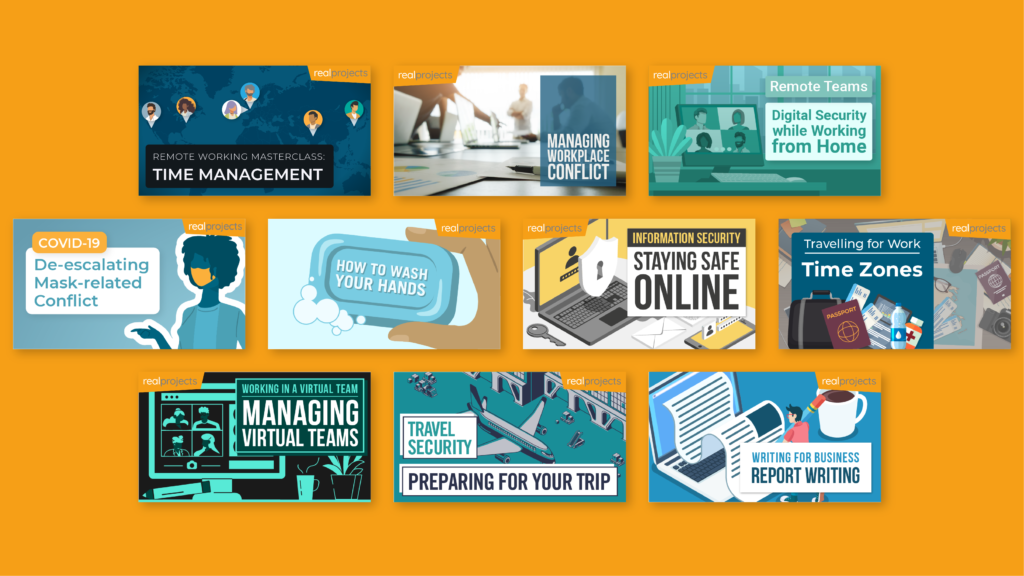
That’s why our elearning library is built with short-format, multilingual content that’s easy to deploy and aligned with modern brand standards.
Questions and Answers
Q: What makes a brand memorable even after the first impression fades?
A: A brand sticks when its values are lived out in the small details, how things work, feel, and respond, especially when no one’s watching. It’s judged by the moment that breaks the illusion, not just by its best moments.
Q: How is brand different from just having a logo or slogan?
A: Brand is a signal, not a slogan. It’s what you stand for, and it shows in how you price, serve customers, design products, and behave every day, not just in what you say.
Q: Why does branding matter in corporate training and elearning?
A: In elearning, branding shows in how content feels, flows, and speaks. Learners notice tone, pace, and clarity. If your training doesn’t match your brand, it breaks trust.
Q: What’s one thing L&D teams can do to improve their brand?
A: Write down what your team stands for in one sentence. Then use it to guide how you design content, train people, and build learning experiences that feel true to your brand.