Off-the-shelf elearning solves a problem, and quickly. You need to deploy high-quality training fast. You probably have an LMS or an LXP and you need content. I’ve spoken to lots of people over the years and the situation is usually the same. They’ve been given a problem to solve.

Normally it will be a new training or business problem. It might be a compliance issue, or they don’t have a solution for a new cyber security requirement. This is where off-the-shelf elearning comes in. The team will have looked across the organisation to see if they have something in place. The answer is normally no. The quotes for custom content have been massive and the lead time long. So the next step is off-the-shelf.
The Quality Problem Nobody Talks About
The problem can be getting quality. I’ve worked in the sector for a long time and whether it’s custom or ready-made, the issue is quality. Currently you’ll hear your local thought leader talking about impact, ROI and delivering behavioural change. I’m talking about before you even get to that. I’m talking about the quality of the course itself.
The problem is that there is a lot of rubbish out there. You might be surprised that I’m saying that. But it’s true. There is a lot of junk. Even at Learning Technologies in 2026 I went onto a really large vendor stand and looked at their money laundering content. Frankly it was appalling. Walls of text, no interaction, and for some reason a random picture of a cat. No offence to cat lovers.
So for those of you looking for real value, you need to think about quality. You need to be looking at production quality. Does the content actually look like something that people will use? And yes, you’ll see content that you don’t like personally, but remember that you are not the only person who will be completing it. I’ve worked with organisations where it’s been a one-person selection team. I’m still not sure that’s the way forward when you’re selecting anything of significance.
How Does Off-the-Shelf Content Actually Help?
A good off-the-shelf library will fill skills gaps fast, cover common training needs at scale, and free up L&D teams to focus on the content that genuinely needs to be custom built. You get all the files that you need and it will support your content and knowledge management process. Don’t get caught out by the claims that you can just stick it in an AI-powered LMS and it will do the rest. You still want good quality.
I’ve worked with plenty of platforms where the LMS, and even AI-powered LMS platforms, are surfacing terrible search results. Why? Because the content in the course is awful and the metadata is non-existent. There isn’t an AI-powered LMS in the world that will solve that problem for you.
We read about impact, behaviour change and ROI, but at the very start the impact piece is actually straightforward. It lets organisations deploy high-quality training immediately, without the time and cost of building courses from scratch. This is overlooked when people are looking at ROI metrics. If you need content and don’t have any, compare the cost of off-the-shelf against custom development and off-the-shelf wins. That’s a development cost ROI, but it’s a real and immediate one.
To start with you will save money against custom development costs and get content up and running faster. But there is still work to do, getting the content out to teams and the internal communication that needs to happen, and that’s often the part that gets overlooked.
If you are reading this you’ll probably have an LMS or LXP and it might already have some content, but what’s the purpose of off-the-shelf elearning content?
Your platform might have come bundled with a library. Some of it might be the right fit for your needs and off-the-shelf elearning is often the faster, easier route, but is it right for your organisation?
With so many options on the market it’s easy to find a set of courses that won’t meet your requirements. Unless you know what to look for, it’s easy to end up with the wrong content and the wrong provider.
This is where you need a specification. Get out into the business and find out what you need. You might not need to go out to the market straight away, but start building a list of the courses that you need. You might want a specialist solution provider, or you might need some additional content to complement what you already have.
Although I’ve talked about the cost of custom, you might come across content that just doesn’t fit off the shelf. It might be that what you really need is a custom solution. This is why you need that list and to understand what is needed within the organisation. Remember that custom can take time, even with new AI tools. And if you build within AI, can you update it quickly and effectively?
Before you go to market, work through this:
Fast, immediate development cost ROI.
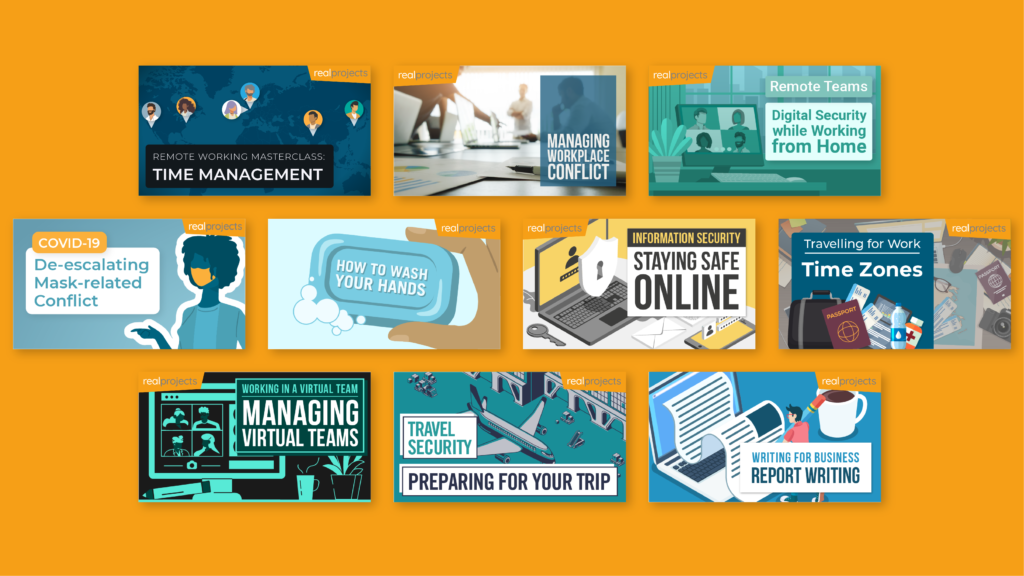
Next: get the course list, thumbnails, metadata and a test SCORM file.
Amend an existing course rather than building from scratch.
Next: check amendment costs against a full custom build.
Factor in build time and ongoing maintenance.
Next: check how quickly it can be updated later, even with AI tools.
Most specifications turn out to be mostly off-the-shelf, with custom reserved for the genuinely specific.
Why More L&D Teams Are Taking It Seriously
You’ll have read the articles about the LMS being dead and perhaps you’ve been to a conference and seen a session about why you don’t need to create content. Here’s why more L&D teams are taking it seriously:
- 76% of companies rely on off-the-shelf content to deliver learning at scale (Training Industry, 2024)
- Off-the-shelf courses cost up to 80% less than custom-built alternatives (Training Industry, 2024)
- Companies using pre-built content are 3.5x more likely to hit training rollout timelines (Brandon Hall Group)
- Up to 60% of L&D leaders now see off-the-shelf training as their first choice for mandatory topics (Fosway Group L&D Realities Research)
Is it worth looking across other sectors and moving out of the L&D bubble to see why the no-content strategy perhaps isn’t the wise choice? Spend some time at cyber security conferences and you can see that in an area like this, having no content just doesn’t seem like a sensible strategy.
What Is Off-the-Shelf Elearning Content?
Off-the-shelf elearning refers to digital courses that are pre-built and ready to use. You don’t need to design or develop them from scratch, although you can often get the option to add your branding. This is something you’ll need to speak to the supplier about as it’s not an option with every supplier.
I’ve spoken to lots of customers about logos and branding. But is this really going to provide the ROI that you need? Are people going to notice the logo on every single piece of training material? I’m not sure that logos provide the ROI that justifies the spend and I don’t think this is a great way to use budget. Be aware of suppliers who push you through a customisation process and watch how much you get charged for it. If it’s something you genuinely want then you’ll need to pay for it, but go in with your eyes open.
Working in the sector, off-the-shelf content is more than the course itself. The best providers give you quality metadata that you can use in your LMS, whether that’s via AI personalisation and learning paths or via your LMS functionality.
You might find that a supplier will allow you to update a specific course with your own content if you find one you’d like to amend. I’d apply the same thinking I shared about branding, be aware of the costs. Think of this more as semi-custom. It might be that you can find a course that is nearly what you need and amend it instead of paying for a full custom build. Always look for the ROI and impact. What is the metric you are measuring against the spend you are putting forward?
How Is Off-the-Shelf Content Accessed?
Most are hosted on Learning Management Systems (LMS) or Learning Experience Platforms (LXP), but you can also access them directly through providers like Course Source or OpenSesame if you don’t have your own platform.
If you don’t have a platform then think about the total cost of ownership. I’m reading lots of posts and articles about what people get from their training, but very few talk about how you actually deliver this. If I’m spending, I’m looking at all of my costs over the life of the licence. All of them. I’m checking through the contracts and working out my total cost of ownership. That’s something few thought leaders actually talk about. Have they worked at enterprise level strategy? Don’t work with theory, ask people who are doing this every day.
If you don’t have your own LMS, these platforms allow you to access courses, manage your learners and get access to reports. This is often a fast and effective way of getting access to content and LMS functionality.
What Topics Are Covered?
I’m constantly surprised by the content that is now covered by the off-the-shelf market. Our own AnalyiSport library covers data analytics in football, but if you head to an industry-specific event the likelihood is that you’d find a training provider delivering content specific to that sector, including elearning. I’ve seen pharma, oil and gas, energy, sport, languages and more.

You might be out there thinking the content isn’t there, but with good research it probably is. You just need to think about whether it is the right quality, and I covered that earlier in this article.
Buyers are often looking for content to solve training gaps and off-the-shelf libraries will quickly and easily do this. As I’ve shared, don’t get caught out by poor quality just because it’s the only option you’ve found. Do that and you are not going to get the impact or the ROI that you need. With new AI, development tools and workflow, content doesn’t take as long to develop as it once did, but custom content still costs money.
Most course libraries include more general topics like soft skills, cyber security and sustainability. But you can also find more specific compliance, governance, or industry-led training.
The advantage for buyers is that they can also find courses on data protection, customer service, health and safety, leadership, and time management. The market is wide, so you don’t need to stick with the companies you see with the largest stands at conferences or exhibitions. To make the most of your budget you need a specification and you need to be careful with your research.

Some libraries also offer niche content for specialised sectors. If you’re in a highly regulated or operationally complex industry, it may be worth looking at providers with deep knowledge of your space. And don’t assume that niche content doesn’t exist just because the topic feels specialist. That assumption is often wrong.
Where Off-the-Shelf Content Works in Practice
One of the questions I get asked most often is whether off-the-shelf content can really work for specialist or niche requirements. The honest answer is more often than people expect.
A football club working with AnalyiSport needed to train their analysts on data analysis and performance metrics. Rather than commissioning custom development, they used existing courses already available in the library. The content was relevant, the quality was right, and it was deployed immediately. No development time, no project management, no wait. That’s the off-the-shelf model working exactly as it should, even in a sector most people wouldn’t associate with ready-made training.
A hospitality group needed to train large numbers of staff across multiple locations on customer service and hospitality standards. Consistency was critical. The same quality of training needed to reach everyone regardless of location or role. Off-the-shelf content gave them that consistency at a scale and speed that custom development simply couldn’t match within their timeline and budget.
A third example is one I see regularly. An organisation needs to keep its people current on cyber security threats and compliance requirements. This is an area where content goes out of date quickly. Building and maintaining custom cyber security training internally is expensive and time-consuming. Using an off-the-shelf library means the provider handles the updates. The organisation gets current, accurate content without the overhead of maintaining it themselves.
These three examples cover very different sectors and very different training needs. What they have in common is that off-the-shelf content solved the problem faster, more cost-effectively, and with less internal resource than any other option would have.
The Benefits of Off-the-Shelf Content
Speed and Simplicity
Most courses are available for immediate use, which means teams can move from procurement to rollout in hours, not weeks. There’s no lengthy build process and no project bottlenecks. Compared to custom elearning this is a significant benefit. It might not be your specific content but the time and cost saving can be considerable.
The best providers will have packs ready to go. This will include the courses, the thumbnails and the metadata. You should be able to integrate the content into your LMS quickly. We’ve worked carefully to ensure that our metadata works with LMS platforms so that the integration is fast. It’s also about how quickly your teams can access the content. You don’t want a clunky integration.
Don’t rush though. Although you can deploy quickly, ensure that you know what you want or you’ll end up with the wrong content from the wrong provider. Have you defined your requirements clearly enough to avoid that mistake?
Cost Efficiency
Creating a bespoke library from scratch is costly. It requires time, talent, and budget that many teams can’t spare. Off-the-shelf content offers a scalable, professional alternative without the upfront development spend. Total cost of ownership is critical here. A lot of elearning is too expensive and the price just goes up and up with significant increases in year 2 and year 3. I’ve seen platforms that started off really low and five years later they’ve got a library with the same courses that is over £12,000 for 150 users.
Reliable Quality
You’re not sacrificing quality for speed. Many leading providers use the same instructional designers, developers, and subject experts for both custom and off-the-shelf content. You’ll often have the chance to review or demo content before buying, ensuring it meets your standards.
The market is now so large that if you develop a good review process, you’ll be surprised by the quality and quantity of products available. Are you making full use of what’s available before deciding whether to build or buy?
Platform Flexibility
Providers like OpenSesame offer large catalogues with flexible licensing models. They’ve got thousands of courses from hundreds of suppliers. You can download content to your own LMS or access it directly through their platforms. Real Projects offers simple pricing and contracts to support organisations looking to develop and expand their library options. Our courses are available in nine languages, including Spanish, Italian, German, French and Portuguese.
Before You Buy
Elearning is more accessible, more scalable, and more varied than ever before. There is more content available, but with that comes varied quality. As well as the specification you need to consider what you are scoring on. Build a scoring matrix so you know how to evaluate courses and then you can measure across them all. Get a couple of people involved in the scoring, including someone from outside of L&D. If you are speaking to vendors, also make sure that you are getting demos that go beyond their standard showcase. You don’t want to see only their top five courses. Make sure you’ve got some of your own choices in the mix.
If you’re under pressure to deliver high-impact training fast without compromising on quality, off-the-shelf elearning content is an option you should seriously consider. Approach this like a software procurement project and have a robust review process in place.
There are thousands of vendors and it’s important that you go through a robust supplier process. Make sure you know what you are looking for and ensure you don’t get stuck with a complicated pricing model and contract.
Thinking about total cost of ownership, ensure that you have involved your IT team as they will have questions about the content, how it loads, passwords and the integration into the LMS. This will have a direct impact on the total cost of ownership and it’s a step that is regularly overlooked.
Frequently Asked Questions
What is the difference between off-the-shelf and custom elearning?
Off-the-shelf courses are pre-built and ready to deploy immediately. Custom elearning is built specifically for your organisation. Off-the-shelf costs up to 80% less and deploys faster. Custom makes sense when nothing available fits your specific need.
How much does off-the-shelf elearning content cost?
It varies, but it costs significantly less than custom development. Watch out for pricing that increases sharply in years two and three. Some platforms start low then climb. One example saw the same library reach over £12,000 for just 150 users. Always check total cost of ownership.
Can off-the-shelf elearning courses be customised?
Some providers let you add branding or amend specific courses. Think of this as semi-custom. But be careful about costs. Branding rarely delivers real ROI. If a course needs significant changes, weigh the amendment cost against commissioning something fully custom.
How do I know if off-the-shelf elearning is right for my organisation?
Start by listing the courses you actually need. If ready-made content covers those topics at the right quality, off-the-shelf is likely the faster, cheaper option. If your requirement is highly specific and nothing fits, custom may be necessary.
Scott Hewitt
Scott Hewitt is the founder of Real Projects, an off-the-shelf elearning content library trusted by organisations including HowNow, OpenSesame, Ticketmaster, and easyJet. He has built a library of over 800 courses across nine languages, with a focus on practical workplace training that’s ready to deploy on any major LMS.
Having helped organisations across sectors including hospitality, sport, and corporate training find the right off-the-shelf content, Scott understands first-hand where the real value sits and how to avoid the common mistakes buyers make.
 Connect on LinkedIn