Learning and development is changing quickly. If you’ve read a whitepaper, attended a conference or exhibition you’ll have seen the rapid developments across the sector. AI, data, and multilingual workforces are reshaping how organisations create and deliver training. Many of the L&D trends emerging in 2026 reflect this shift.
It is easy to feel that you are falling behind, but remember what you are reading about is often not the actual reflection of what is happening within organisations.
At the same time, organisations are discovering that technology alone is not enough. Quality, governance, and human expertise still matter when training needs to work across global teams.
The freelance developer or start-up company might have more flexibility to trial, move and implement. This does not mean that you cannot set up an innovation lab or work dynamically, but you must consider the sector and restrictions that you may or may not be working within.
Across projects, conversations with L&D teams, and the work happening behind the scenes in content development, several patterns are becoming clear. Some developments are new. Others have been building for years but are now becoming far more visible across the industry.
You will be reading trends, whitepapers, and seeing constant videos and listening to podcasts about what people are doing with technology to get ahead. But as well as the trends we are looking at, you can also look to other digital platforms to see what trends and technology are making advances.
Do you ever look at what is happening in UI and UX within website design? When was the last time that you attended an SEO conference? What are digital marketers doing with data to understand the user journey and improve the customer experience?
Do not just stick with L&D. Spend time speaking to people working in other sectors and you will gain insights and even an advantage that others do not have.
Key Industry Insight
The global corporate training market reached $391.1 billion in 2025, highlighting the scale of investment organisations are making in digital learning technologies, training content, and workforce development.
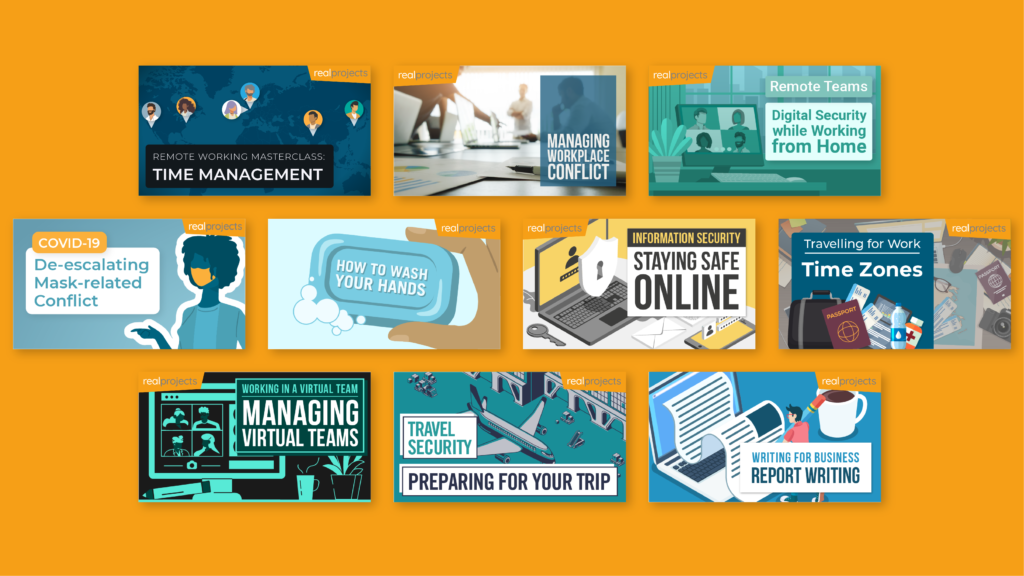
At the same time, learning formats are evolving rapidly:
- 85% of organisations now use video-based microlearning as part of their learning strategy.
- Microlearning courses achieve around 80% completion rates, compared with about 20% for traditional long-form courses.
- AI-powered learning systems can analyse learner behaviour and content data to personalise training recommendations and optimise learning delivery.
Sources: Training Industry, eLearning Industry
What Are the Key L&D Trends for 2026?
Several developments are shaping how organisations approach learning and development.
The most important L&D trends in 2026 include:
- Multilingual learning content for global workforces
- AI-assisted translation combined with human review
- Accessibility becoming a core requirement in digital learning
- AI-assisted coding expanding elearning development capabilities
- Data-driven learning decisions across organisations
- Short-form learning and microlearning as entry points to training
These developments show how organisations are combining new technology with practical experience to create scalable learning strategies.
The Expanding Demand for Multilingual Content
One of the most consistent requests coming from organisations is the need for training content in multiple languages.
Twenty years ago localisation was a slow process. Slow connection speeds meant that much of the process involved using the postal system, especially if you were using video. The workflow involved paper notes and a long-winded review process. Cloud based software didn’t exist and the process involved a back-forward that saw single projects take months.
Humans were integral to the localisation process, with machine translation years away. The development of machine translation and AI tools, alongside cloud tools and collaboration software has transformed localisation.
This requirement is no longer limited to global corporations with offices scattered around the world. Even companies that operate primarily in one region are discovering that their workforce is multilingual. Employees may come from different countries, speak different first languages, or work across locations that require localised training.
For many organisations the process begins with a simple request. They want a course translated into another language. Then a second request follows, perhaps for Spanish or French. Soon the discussion becomes more specific. And more languages follow, one course is quickly becomes available in multiple languages and the rollout becomes a success.
But this is no longer just about translating content. It becomes about translating into the right version of a language. Latin American Spanish rather than European Spanish. Regional terminology that matches how people actually work. Local cultural references that make the training feel natural rather than imported.
It is also not just about pressing translate.
Quality quickly becomes the defining issue. Organisations are not simply asking for translated content. They want language versions that feel as though they were originally written for that audience.
At this point Scott Hewitt introduces a practical perspective drawn from real localisation projects.
Scott Hewitt asks:
“There is clearly growing demand for multilingual learning content, but it has to be done properly. Anyone can translate text with AI. That is not new. We have had translation technology for years. But translation alone does not produce good learning. If a tool can translate content into 120 languages, that does not mean the result will be good. You still need a strong workflow and human expertise involved.”
Why Human Quality Still Matters in an AI Translation Era
The arrival of new AI tools made translation suddenly accessible to people who had never worked with localisation before.
For years machine translation has existed in the background of many industries. What changed was that AI tools placed translation directly into the hands of everyday users. It became possible to paste content into a tool, press a button, and instantly generate another language.
This created an early assumption that translation could now be automated completely.
In practice, organisations are discovering that this approach quickly runs into limits. Literal translation does not automatically produce good learning content. It may capture the words, but it often misses the meaning, tone, and context.
The trend that is emerging is not AI-only translation. Instead it is a hybrid approach.
AI speeds up the process and handles large volumes of text, while human experts review the output, refine terminology, and ensure the content works properly in the target language. In many projects the human review stage becomes the difference between a translated course and a usable one.
The expectation is shifting. Pressing a button and accepting the result is no longer enough. Quality localisation has returned as a core requirement.
The trend for 2026 is the development of localisation workflow teams away from ‘just press translate’. Organisations are looking into how they can translate key information within their organisation but with a workflow process suports language requirements and delivers a quality product. Pressing translate is not going to be enough, especially in areas where compliance and quality are a critical factor.
Accessibility Moving From Guideline to Expectation
Another development gaining momentum across digital learning is accessibility.
Accessibility standards have existed for many years, but they are increasingly becoming a central requirement rather than a secondary consideration. Organisations want to ensure their learning platforms and digital products work properly for everyone.
This shift is visible in several places.
First, organisations themselves are demanding higher standards. Compliance requirements and internal policies are pushing teams to ensure their training materials are usable by people with different needs and abilities. We are seeing development teams and providers go back and re-launch courses and projects to improve the accessibility of existing projects.
Second, development tools are starting to respond. Authoring platforms and design software are beginning to incorporate accessibility features directly into their workflows. Instead of treating accessibility as something added at the end of a project, the tools themselves are starting to support it during development.
What organisations are starting to realise is that accessibility is not just a technical requirement. It is part of building digital learning that works for a diverse workforce.
Website development is an area where accessibility has made a lot of advancements over the last few years and the leading elearning developers are looking to this sector as a place to learn to ensure that their projects are meeting the key accessibility requirements. The trend for 2026 will be accessibility as part of project development and not an add-on.
The Rise of AI-Assisted Coding in Learning Development
Another interesting development is happening in the way learning content is built.
Traditionally, instructional designers have worked within the boundaries of the authoring tools available to them. Platforms such as Articulate Storyline and other development environments provide extensive capabilities, but there has always been a limit in terms of what a development could do. They’ve had code areas, and developers had pushed this but we are now seeing new code blocks in toold like Articulate Rise.
Developers often relied on workarounds. Small pieces of custom code, creative uses of triggers, or unconventional approaches inside the software to achieve the interactions they wanted.
The arrival of AI-assisted coding has expanded those possibilities.
Tools that generate code snippets or help developers experiment with new functionality are allowing instructional designers to extend their authoring tools beyond their default features. What previously required specialist programming knowledge is becoming more accessible.
At the same time, this shift introduces new challenges. Code produced through AI prompts still needs to be checked carefully. It must comply with accessibility standards, avoid security risks such as code injection, and integrate safely into enterprise systems.
In other words, AI-generated code expands what is possible, but it also increases the need for technical understanding.
The Growing Importance of Data-Driven Learning Decisions
While technology often attracts the most attention, another trend is developing quietly in the background.
Learning teams are beginning to rethink how they use data. Data has been widely used in other sectors like football, where data driven decisions have been widely used for years, not only on-field but also within the organisations – and over the last few years the two have bcome increasinly integrated.
For many organisations, learning data has traditionally existed in isolation. Completion rates, course attendance, or quiz scores are recorded inside a learning management system, but rarely connected to wider organisational performance. With the L&D sector specific data is often dismissed as vanity metric, but the reality is that all data has valued when mapped or integrated with other business model.
The next stage is integration. And the key descision is how you use your data to make key learning decision. Used on its own completion data may not provide any value, but linked to key IT and Marketing information this can provide key metric and insights.
Learning data is beginning to be viewed alongside other organisational data sources. Human resources metrics, financial indicators, operational performance data, and field results are starting to form a broader picture of how learning influences performance.
This shift also changes how often data is examined.
Instead of analysing learning results once or twice a year during budgeting cycles, some organisations are beginning to track patterns more frequently. Weekly or monthly analysis allows them to identify trends and respond more quickly.
A lot of this thinking already exists in other sectors. Sport, engineering, and manufacturing have long used data analysis to monitor performance and adjust strategy in real time. Learning teams are starting to explore how similar approaches might apply to training and development.
The key difference is the move away from static reports toward continuous insight.
Scott Hewitt also highlights a broader point about how the learning industry is often perceived.
Scott Hewitt asks:
“Another misunderstanding is the scale of the learning market. The industry is far bigger than people realise and it operates across the entire world. It is not defined by a few conferences or voices on LinkedIn. You need to talk to organisations and see what they are actually doing. Not everyone is working at the cutting edge of AI.”
Shorter Content as an Entry Point to Learning
Short-form learning content is often described as a new trend, but the reality is more complicated.
Short learning objects have existed for many years. What has changed is the scale of demand for them.
Organisations are increasingly requesting shorter pieces of training content. These may last two or three minutes and focus on a very specific topic or task. In some cases, organisations are experimenting with extremely short formats sometimes described as nano learning.
Before moving further into this topic, Scott Hewitt offers another observation based on practical experience with organisations requesting shorter learning formats.
Scott Hewitt asks:
“Microlearning is clearly important for organisations. The term gets debated and sometimes dismissed, but I am working with teams that genuinely need short-form content. I do not think this is because people have short attention spans. It is because no one wants to sit through an hour-long course on cyber security passwords or how to lift a box. Much elearning has simply been too long and too dull.”
This does not mean longer learning has disappeared.
Complex topics still require deeper explanation and extended learning experiences. What short content provides instead is an entry point. Employees can quickly explore a topic, understand the basics, and decide whether they need to engage with more detailed material later.
In practice, short content often works best as part of a larger learning structure. It allows people to access information quickly without committing to longer training sessions before they know whether the content is relevant.
The key misunderstanding is the idea that everything can be learned in a few minutes. Short content does not replace comprehensive training. It simply changes how people begin the learning process.
Understanding What These L&D Trends Really Mean
Taken together, these developments suggest that the learning sector is entering a period of adjustment rather than simple disruption.
AI tools are expanding what teams can do, but they are also revealing the limits of automation. Translation still needs human expertise. AI-generated code still requires technical oversight. Data still needs interpretation.
At the same time, organisations are becoming more demanding in areas such as accessibility, localisation, and performance measurement.
Scott Hewitt closes with a final reflection on the nature of industry trends.
Scott Hewitt asks:
“Trends are predictions. They reflect what people think might happen. But it is difficult to know what will really take hold. Organisations still need to focus on their own strategy and challenges rather than relying completely on what the industry says the next big trend will be.”
Perhaps the most interesting insight is that many of the most important developments are not entirely new. Multilingual content, accessibility, microlearning, and data analysis have all existed for years.
What is changing is the scale at which organisations now expect these capabilities to operate. These L&D trends for 2026 show how organisations are combining new technology with practical experience to build more scalable and effective learning systems.
The organisations that adapt best will likely be the ones that combine new technology with practical experience. They will not replace human expertise but use technology to extend what skilled learning teams are able to do.
Frequently Asked Questions
What are the biggest L&D trends for organisations in 2026?
The biggest L&D trends in 2026 include multilingual learning, AI-assisted content creation, accessibility-first design, data-driven learning decisions, and shorter learning formats. Organisations are focusing on scalable training that works across global teams while maintaining quality through human review and strong content governance.
How is AI influencing learning and development trends?
AI is helping learning teams create content faster, generate translations, assist with coding, and organise learning libraries. Many organisations are discovering that AI works best when combined with human expertise to ensure accuracy, accessibility, and quality learning experiences.
Why are organisations investing in shorter learning content?
Short training modules allow employees to access information quickly without committing to long courses. Many organisations use short-form learning as an entry point to a topic, helping employees decide whether they need deeper training later.
Why is content management becoming important in learning platforms?
As learning libraries grow, many platforms become difficult to navigate. Organisations are using AI tools and structured taxonomy systems to categorise content, manage versions, and remove outdated materials so employees can find relevant training more easily.