Organisations often confuse a course with a curriculum, and it holds back learning at scale. A curriculum isn’t just more content. It’s a structured journey that builds real capability. Curricula are widely used and widely debated, particularly in schools and education.
You’ll often read and hear about what should be in the curriculum, especially in schools. The make up of a curriculum isn’t an easy thing to deliver, you need to be think strategically and its more than just putting content together.
A useful way to think about it:
A Course = One Skill
A Curriculum = Strategic Learning Path
Done right, it drives engagement, retention, productivity, and revenue.
Why Most Organisations Get Curriculum Design Wrong
Most teams don’t have a real strategy. They just add courses and call it a curriculum. Without a clear structure, you end up with random content and no clear path, repetition and skill gaps, and confused learners who aren’t getting results.
There are a few things worth getting right from the start:
- Start with a competency assessment (this isn’t a test)
- Design for consistency, progression, and reuse
- Train subject matter experts to teach well
- Make stakeholder input part of your process
You might need to think about where you are going to document your curriculum. It might start as a Google Doc, but then you might use something like Notion so that you can publish and have a more a web based interface. When we are talking about curriculum design, it’s not graphic design – it’s the structure, infrastructure and how it’s going to be used. At this stage you also need to be thinking about reviewing your curriculum.
It is easy to have a curriculum in place and then have out of date content that is delivering content that doesn’t meet the need of the audience.
What’s the Difference Between a Course and a Curriculum?
It’s a question that often surfaces when organisations begin to develop structured learning. Sometimes it starts with a brief to scale the training programme. Other times, it’s when someone realises existing content isn’t delivering results.
A single course typically covers one skill. A curriculum builds broader competence. It’s layered, sequenced, and aligned with outcomes. Moving from one to the other isn’t just a content challenge, it’s a curriculum design challenge. It takes time and input from across the organisation.
The evidence for getting this right is hard to ignore. Teams that receive structured training are 17% more productive (Devlin Peck), and 76% of employees say they are more likely to stay with a company that invests in continuous learning (eLearning Industry). Perhaps most directly relevant for anyone making the case internally: companies with curriculum-based programmes are more likely to report increased revenue than those running ad-hoc training (Intellum).
Start With a Baseline: The Case for Competency Assessment
Every curriculum design project raises important questions. Some come from stakeholders. Some you’ll need to ask yourself:
- Where are people starting from?
- What gaps are we trying to close?
- How will we know if they’ve succeeded?
One insight that stayed with me came from a training conference. A delegate shared how critical it is to assess competency levels early. Without that baseline, everything else is guesswork.
Assessment isn’t about passing or failing. It helps personalise the learning journey, especially for those already close to competence. You might want to consider a pre-assessment or pre-qualification to understand where people are before the curriculum begins.
Working on AnalyiSport, this became very clear to me. Why are people still treating assessments only as a pass/fail test? When we used them in AnalyiSport and on projects in education, it was about helping people know where to start and giving them useful feedback. It doesn’t always need to be a test.
Closing the Knowledge Transfer Gap
Experts don’t always make great teachers. Translating deep subject matter expertise into accessible, plain language is a skill in itself. That’s why part of building a curriculum includes supporting SMEs to share their knowledge effectively.
Five Design Principles That Make the Difference
Curriculum design always comes with constraints: legal compliance, certification standards, limited budgets, and organisational resistance. These are real challenges, but manageable with the right approach.
- Start with stakeholder input and work backward from business goals
- Build with consistency and make sure no course contradicts another
- Include prerequisites and define a clear course sequence
- Plan for sustainability and long-term updates
- Include a final applied project that brings all the learning together
The final project isn’t just a final activity. It’s the point where learners demonstrate that they can apply their learning in a real-world context.
A curriculum is a plan, more than anything else. That plan should sequence courses in a logical, progressive order, align with external standards and internal performance goals, ensure consistency across all modules, and lead to something meaningful: a certification, job role, or defined capability.
Is there a clear strategy behind this learning journey? Without one, even the best content can lose impact. A curriculum isn’t about volume, it’s about purpose. Sometimes a handful of well-structured elements can achieve more than dozens of disconnected courses.
Design for Reuse
Effective curriculum design considers how content can be used across different levels, formats, and regions. Content that is easy to adapt and update saves time and reduces cost in the long run, especially when reuse is planned from the outset.
Are we designing for reuse? We talk about sustainability, but how do L&D leaders support this? Do you throw away or delete project files? You should be looking to see how you can re-use as much project content as possible.
Successful teams ask clear questions: “What’s blocking progress? What skills are missing?” They avoid jargon, rely on quick sketches rather than lengthy slide decks, and focus on clarity. This approach helps maintain momentum and supports scalable delivery.
Several years ago we developed football content and a request to expand a course often evolved into something more strategic. It required stepping back, aligning with business goals, and designing a learning experience with measurable impact.
That’s the essence of curriculum design: a plan for change, built with purpose and scale in mind.
Frequently Asked Questions
What is the difference between a course outline and a curriculum?
A course outline covers what’s in a single course: topics, objectives, and structure. A curriculum links multiple courses together in a planned sequence to build broader skills over time.
What do you mean by curriculum?
A curriculum is a structured learning plan. It includes multiple courses, sequenced properly, with clear goals and outcomes, usually aligned to a job role, certification, or real-world skill.
What is the difference between curriculum design and course design?
Course design is about one course: its content, format, and delivery. Curriculum design looks at the bigger picture and considers how all courses work together to build skills step by step.
What is an example of a curriculum?
A leadership curriculum might include courses on communication, decision-making, team management, and conflict resolution, delivered in a specific order to support promotion into a senior role.
Scott Hewitt
Scott Hewitt is the founder of Real Projects, an off-the-shelf elearning content library trusted by organisations including M&S, GSK, AstraZeneca, Ticketmaster, and easyJet. He has built a library of over 800 courses across nine languages, with a focus on practical workplace training that’s ready to deploy on any major LMS.
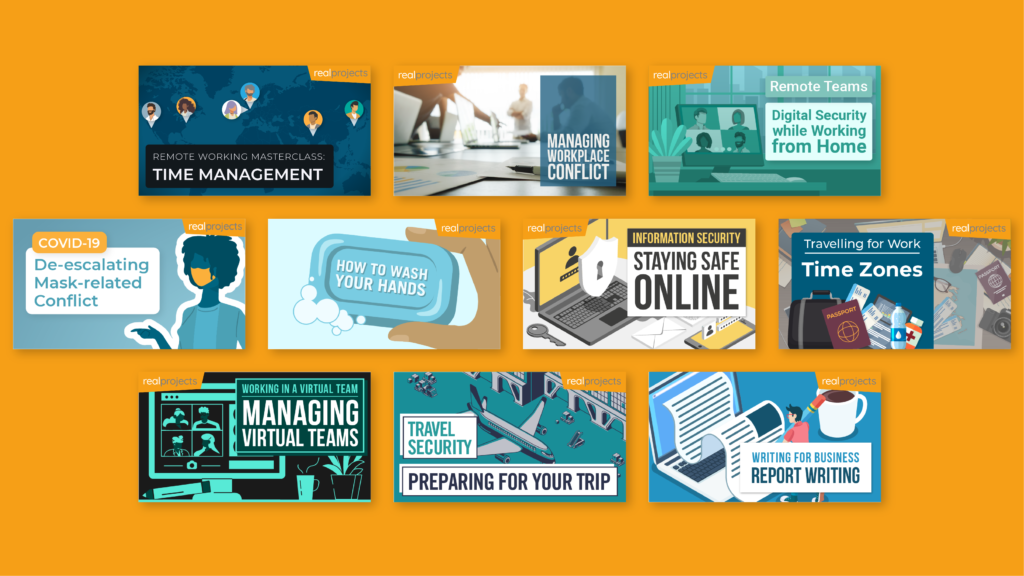
The 11 topics in this article were developed from direct conversations with L&D teams about the challenges their people are facing right now. Every course in the library is built to the same standard: short, focused, and built for real working environments.
 Connect on LinkedIn