Off the shelf elearning or ready-made elearning refers to digital learning content that has already been designed, developed, and packaged for immediate use. This is mainly elearning courses. These will normally be SCORM courses that can be deployed quickly and easily in an LMS or LXP.
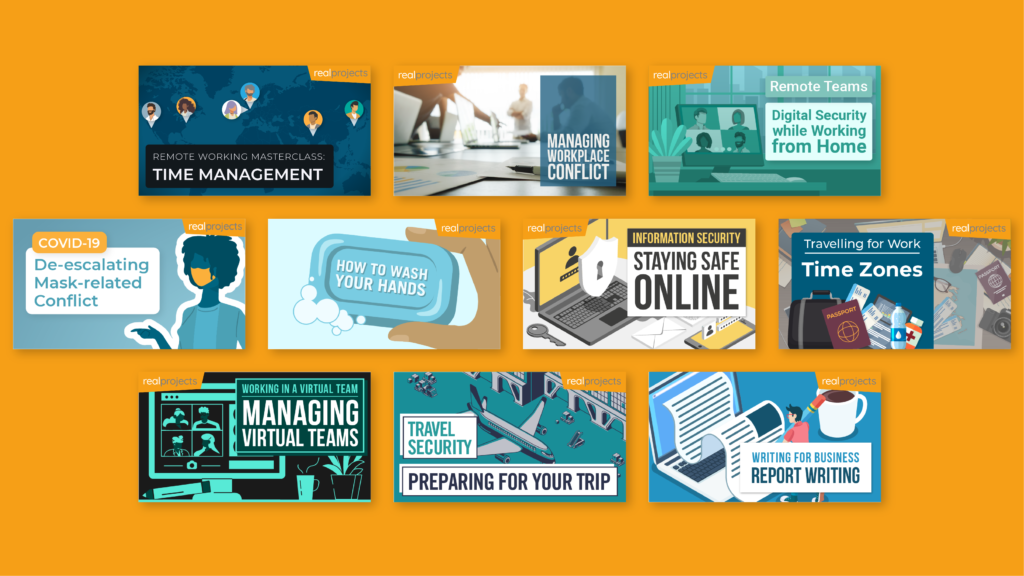
The courses will not need any modification or alteration before they are put into your LMS. This is the main advantage of using off the shelf content. With the course files you will normally get a graphic thumbnail and metadata so that you can display the course information in your platform so that your users can easily see the course information. User admins can also use the metadata for skills mapping and building learning paths and career pathways.
Off the shelf content has become an integral part of the learning strategy of many organisations and a key part of their digital learning provision. It is widely available, relatively easy to buy, and often bundled as libraries that promise fast access to large volumes of content. What is less clear, and far more important, is how well it actually works in practice.
The misconception is that you can just put these into your LMS and expect learners to get access to them and get the best results.
This guide goes beyond definitions. It focuses on how off the shelf elearning is used in real organisations, where it delivers value, where it breaks down, and why some L&D teams consistently get more from it than others.

Why This Guide Exists
Off the shelf elearning is everywhere. Walk around any conference or exhibition and off the shelf is available. It will be bundled with an LMS or LXP and there will be elearning libraries. At Real Projects our library is available with LMS partners and we offer our library for people who need new content for their existing platform.
Why? Content works. And despite the posts that you might read, the LMS and LXP are not dying. Done in the right way, content and the LMS still works if you integrate it within your learning strategy.
Content and off the shelf content exists across almost every sector, for organisations of every size. You can buy content at a wide range of price points. Most L&D teams already have access to it, are renewing an existing licence, or are actively considering buying it.
Many teams already have an elearning library in place. Others are approaching renewal, questioning whether the licence they have still makes sense, or trying to decide what to buy next. Some are at the very beginning, working out what to buy, who to buy from, and how it should fit alongside everything else they are doing.
This might be you. You could be at the start of your journey buying content, or you might be wondering how to get the best value out of your budget. It could be that your current off the shelf content just is not working for you. You might have read the posts about why you should not build or buy content.
The problem most teams face is not access. It is not about whether the content exists or whether they can afford it. The real challenge is making it work in the context of day-to-day work. I have spoken to hundreds of buyers and leaders. They all have different challenges. One thing I have learnt is that they need to get learning content to lots of people in lots of locations, and a good elearning library in a decent LMS helps to do this.
That challenge shows up clearly in the data. Elearning accounts for a meaningful but limited proportion of formal workplace learning, average learning time per employee is falling, and large libraries are often underused or poorly applied.
The issue is not investment or availability, but how deliberately content is selected, deployed, and supported. If you get it right it can help what you are doing. Do not buy a library of 400 courses expecting everyone to use every course. You need a smart strategy about who is using what, when, and in what location.
A challenge is making it work in the real world of work, where priorities shift, time is limited, and learning has to compete with everything else people are dealing with.
That challenge shows up clearly in the data:
- The global elearning market was valued at $313 to $342 billion in 2024, with projections of $682 billion by 2033 at an 8% CAGR (Research and Markets; Precedence Research).
- Elearning services are projected to grow at 20.60% CAGR from 2025 to 2034, rising from $378 billion to over $2 trillion (Precedence Research).
- Global corporate training spend has reached $391.1 billion, reinforcing that the issue is not access to content but how effectively it is used (Training Industry).
- Average formal learning hours per employee fell from 17.4 to 13.7 year on year, indicating reduced tolerance for long or unfocused learning activity (ATD, 2025 State of the Industry Report).
- Active use of elearning libraries is less than one third of licensed users, suggesting widespread underutilisation of purchased content (Chief Learning Officer, Learning Analytics Dashboards).
- 55 percent of learning is not optimally applied within six weeks, highlighting the gap between course completion and real-world performance (Chief Learning Officer, Learning Analytics Dashboards).
Across all of this, off the shelf elearning continues to play a central role in workplace learning, but off the shelf elearning only delivers value when expectations are realistic, off the shelf elearning is deliberately integrated into learning strategy, and off the shelf elearning is supported by context rather than treated as a standalone solution.
This guide is about how off the shelf elearning actually gets used in practice, not how it gets sold.
What Off the Shelf Elearning Actually Means
Off the shelf elearning is ready-made learning content that is designed to be used across multiple organisations.
When you buy it, you are buying the same content that other organisations are buying too. The advantage is that the content has been tested, reviewed, and checked. You can then reach out to other people to get reviews and see what they thought of the content. Custom is a great option if you have very specific requirements but you do not know what it looks like until the end.
You might be a charity, a business, a public sector organisation, or a club, but you are buying and using the same content that other organisations are using, and that is an advantage for you. Off the shelf is built for speed, scale, and consistency rather than for a single organisation’s exact context.
Content is normally delivered through an LMS or an LXP. You might already have your own platform, you might buy one alongside the content, or you might access the content through a provider’s platform. Years ago, that infrastructure might have lived on a server in a cupboard somewhere. Today, it is almost always cloud-based, with people accessing content on mobile, tablet, PC, or Mac.
If you are at the stage of your journey with off the shelf content where you do not have an LMS or LXP and are thinking about how you can get the content to your learners, this is not a problem. You can get an LMS or LXP in the cloud. Like most cloud solutions, they are priced based on your budget and functionality requirements.
Off the shelf elearning is designed to solve common problems that most organisations have: cyber security, information security, leadership basics, writing skills, and compliance. If you have a very specific requirement then you will probably look at a custom solution. However, there are more and more niche off the shelf providers that might be supporting your sector, so look carefully if that is what you need.
Do not think that off the shelf elearning is a cheaper solution or a one-stop solution. It works best as part of your learning strategy, and whilst you can get a great price per learner, what matters is understanding what off the shelf elearning actually is. It is not cheap training or budget training. It is standardised training that is designed to work well, repeatedly, and at scale.
Something that I speak to L&D leaders about is whether buyers dismiss this approach because it genuinely does not fit the problem, or because it does not match their personal preferences as L&D professionals.
What Off the Shelf Elearning Is Designed to Do Well
Off the shelf elearning works well when it is used for the jobs it was designed to do.
It provides baseline knowledge quickly and efficiently. It covers common topics such as compliance, safety, leadership fundamentals, cyber security, and information handling, where the core knowledge is broadly consistent across organisations. As I have already shared, if you have specific niche content or content specific to your organisation, off the shelf is not going to get the results that you need.
It supports distributed and global teams, particularly when libraries include language options and properly localised content rather than simple translation. Localisation matters, because content needs to feel considered and relevant, not like an afterthought. But when you are looking for content that has been localised, this is the key. You do not want content that just presses translate. The results are normally not great, even with the advances in AI. You still want people to check the output to make sure you have a great localised product that works in the target country.
Off the shelf works really well and reduces time to launch for new initiatives. When something changes within the organisation and content needs to be deployed quickly, off the shelf elearning allows teams to move in days or weeks rather than months.
There might be a new piece of legislation, a cyber security risk, or an urgent requirement within the training team list that you need to address. Off the shelf works well here. The key is also about how you make sure that your teams know that the content is out there. This is where great metadata supports your internal marketing so that your teams know that the content is ready.
If there is a new risk, a policy update, or an urgent requirement, it provides a fast way to get baseline knowledge in place.
I have asked many leaders: if you need to reach thousands of people quickly, what matters more right now, perfect tailoring or effective coverage? Have you thought about this? Our off the shelf team is the same team that develops our custom content, so you are getting the same quality content.
The Expectations Gap That Trips L&D Teams Up
Many of the issues L&D teams experience with off the shelf elearning come from an expectation gap. Do not expect bespoke if you are buying off the shelf. It is a common mistake and I see this a lot. “We bought this library and it is missing this.”
Production quality can be high, but it is not designed to reflect your internal language, culture, or nuance in the way custom content does. If teams find themselves thinking that something important is missing, that is often a signal that custom content is needed to sit alongside it. I have spoken to leaders where they said the off the shelf library did not support the requirements, but the reality was they really needed a very specific custom piece of learning. You need to know what your learning requirements are.
Another expectation is high engagement without context. Learning does not happen just because content exists. People still need to understand why they are being asked to engage with it, what problem it is intended to solve, and how it connects to their role and their work. This is why we have developed excellent metadata. You need to understand how to get the content out to your teams. I am personally a bit tired of the hundreds of Netflix and L&D posts that I read. They never really reference whether the user is actually the right fit for Netflix, or whether they have looked for another streaming platform.
The key point here is that just because you have got content does not mean that the user will find it or engage with it. You need to direct the user to the content. This is why Netflix has a YouTube channel, why it markets its own content even though people pay for the subscription. They still need to market the releases. It even has premieres.
There is also an assumption that off the shelf elearning will drive behaviour change on its own. It will not. It is one part of a wider learning mix, and it works best when it is connected to other activity rather than treated as a standalone solution.
At conferences I speak to people about content. They will be looking for content, and the leaders are not just thinking about content. They are working out how to deliver and deploy. If you are only thinking about the content element, you are likely to have problems down the line. It must be part of the strategy.
Without guidance, structure, and clear pathways, even well-designed libraries struggle. People still need help navigating what is available and understanding what matters. I have come across so many posts about how people have not found content or that the LMS is useless. But when I have looked at the LMS user interface and the metadata, it has been poor. The metadata that supports the content needs to be excellent. You will also read about AI that surfaces great results by reading the SCORM. But this is search. It is not delivering the indexing and the initial user interface to start with.
How L&D Teams Actually Use Off the Shelf Elearning in Practice
The most common use is scale and speed. Organisations are under pressure. Budgets, time, compliance targets. An effective off the shelf elearning rollout will help solve that. If a compliance deadline is coming, off the shelf can help to solve the problem.
It is commonly used as part of induction and onboarding, providing a foundation rather than a complete picture. It is often used for compliance refreshers, where the aim is reinforcement rather than deep learning.
Many teams use it as pre-work or follow-up around workshops, programmes, or events. Others use it as a solution when custom content is not justified, not ready, or not required for a particular need. Using off the shelf to support a custom project is often overlooked. If your custom project is overrunning or is likely to be a long-term project, off the shelf can be a great gap solution until it is ready.
It also plays a role in performance support, particularly when content is short and accessible at the point of need. In larger organisations, it provides consistency across teams, locations, and languages, especially when L&D teams are small and expectations are high.
Languages are overlooked. At Real Projects we are now working in 9 languages, and getting the same content in multiple languages is absolutely key for companies that are looking for content that works across a multilingual workforce, not just across countries.
Are you judging elearning based on personal preference, or on whether it works at scale for the thousands of people it is designed to support?
Across all of these use cases, the pattern is the same. Off the shelf elearning sits within a broader learning strategy. It is part of the infrastructure, not the programme itself.
Where Off the Shelf Elearning Starts to Break Down
Off the shelf elearning starts to break down when it is used in ways it was not designed for.
Content can feel generic or irrelevant when it is not aligned to specific roles or contexts. Language and localisation issues create particular problems for global teams when content has simply been translated without care or quality assurance.
Another challenge is having too much content and not enough direction. Large catalogues can provide a sense of coverage, but without curation and guidance they quickly become overwhelming.
Overuse is another issue. When too many courses are assigned at once, or when content is pushed out constantly, completion drops and recall suffers. Nothing stands out as important, and learning activity starts to feel like noise rather than support.
Why criticise delivery formats like animation or video, when the real issue is how learning is deployed, supported, and applied?
These situations are often described as failure, but they are usually the result of misuse rather than poor content.
AI and Off the Shelf Elearning
AI is everywhere and it has had an impact on elearning. Most elearning development tools now have AI functionality. This might be the ability to create content, questions, audio, or an entire course.
Initially elearning developers were using tools like ChatGPT to help create scripts, ideas, and develop initial storyboards, but now we are seeing entire courses developed using AI. For the buyer of off the shelf content it might be harder to see what has been created using AI and what has been created by humans.
If you are in this position you might need to consider asking what has been created using AI, especially if you are thinking about translation. I have seen products where they offer 40 languages but the content is not localised. This is content at the push of a button and whilst this might solve a problem in specific languages, it is not getting the quality that you need with humans in the loop.
AI is increasingly being used in the development of off the shelf elearning content but you need to be clear about where it sits in the process. Are you getting a quality product and are you still paying the same price? I have spoken to a developer who takes a graphic, sticks it into AI and gets a four-second animation, just to give the course some interaction. This is not a good use of AI. So think carefully about what you are getting within the course that you are buying.
The development tools are also growing quickly. I am reading about the excitement around tools like Claude Code, with groups of instructional developers getting excited about the graphic output and the speed at which courses are being produced. This makes a huge difference for the people involved in the production of off the shelf content. But in the conversations and threads I have seen, there is little discussion about accessibility and governance. The large development tools have been criticised and at times have been slow to keep up with some user group requirements, but accessibility is still a requirement and must not be forgotten as the speed of AI gets all of the attention.
Off the Shelf Elearning vs Custom Content: The Practical Difference
This is not a question of which approach is better.
Off the shelf elearning is faster to deploy and cheaper to scale. Custom content is slower, more expensive, and more specific to your organisation.
The most effective learning strategies use both. Off the shelf elearning provides speed, consistency, and coverage. Custom content addresses unique processes, risks, or priorities that cannot be covered effectively by standardised material.
If you are only debating content type, are you missing the bigger question about delivery, timing, and impact?
The real question is not which option is better, but where each fits.
How High-Performing L&D Teams Make Off the Shelf Elearning Work
High-performing L&D teams are deliberate in how they use off the shelf elearning.
They curate aggressively, focusing on less content and better outcomes rather than pushing everything to everyone. They select short, specific modules and align them to real moments of need rather than deploying content simply because it exists.
They use data thoughtfully, reviewing usage patterns, completion, drop-off points, and repeat visits, and removing content that does not work. They treat the library as a living system rather than a static collection of assets.
If delivery is everything, are you spending enough time on how learning shows up in the flow of work rather than what format it takes?
Most importantly, they treat off the shelf elearning as a foundation, not a finish line. The real value comes when it is combined with facilitation, discussion, coaching, and context that connects learning back to work.
When Off the Shelf Elearning Is Not the Right Answer
There are clear situations where off the shelf elearning is not the right solution.
Complex, organisation-specific processes often require custom content to avoid confusion. Sensitive cultural or behavioural change work needs dialogue, reflection, and shared understanding rather than standalone courses.
In high-risk environments, context matters. Generic scenarios can fall short where safety, safeguarding, or critical decision-making is involved. Skills that rely on judgement, communication, or practice need rehearsal, observation, and feedback, not just passive consumption.
Where does this need practice and feedback rather than information and awareness?
The strongest L&D teams are clear about where off the shelf elearning fits and where it does not.
A Smarter Way to Think About Off the Shelf Elearning
A more effective way to think about off the shelf elearning is as part of your learning strategy rather than just courses that you dump and go. You need to think about the strategy. How people get to the content and how you manage it. This is easier than ever with the functionality within LMS and LXP platforms and the AI tools that you can use.
Volume matters for procurement, but outcomes matter for learning. The focus needs to be on where content adds value, how it supports better decisions, and how it helps people perform with confidence in real situations. You are buying the library for scale but do not expect everyone to use every course. It is not a completion task to get everyone to use every course. Even if each person used 3 to 5 courses you are getting an incredible ROI.
Off the shelf elearning works best when it is combined with targeted support, providing consistency and speed alongside facilitation, coaching, and context. Courses that are revisited, shared, or referenced after events often deliver more value than those that are completed once and forgotten.
I have shared this with many customers. Delivery is everything. You need to think about how you get the content out to the teams.
Measuring usefulness matters. Do not dismiss completion. It is dismissed too easily, but you need to use it as part of a series of metrics. If completion rates are low it might be that access to the LMS is difficult. Turn the thinking upside down.
When off the shelf elearning is designed into a learning strategy rather than bolted on, it becomes part of the foundation rather than unused content sitting in a catalogue.
Closing Thoughts
If you are looking for content then the key is to evaluate what you need. You will have read the posts or articles about how most L&D teams do not need more content. They need the right content. They need clarity on how to use what they already have. But a no-content strategy also does not work. It does not support changes in compliance, the fast-moving areas of AI, tech, and cyber. You need to have a strategy that works and this includes version control and knowledge planning. How are you making sure that the content coming into your LMS is current? Are you having to keep your own sheet in Excel or Airtable just to keep track? That is not the way forward.
Off the shelf elearning can and should deliver real value when expectations are realistic and use is intentional. Do not just dump it into the LMS and expect it to work. I have worked with large organisations and the smallest. When it is treated as infrastructure rather than a shortcut, it becomes a meaningful part of modern L&D rather than something teams quietly lose confidence in.
Questions and Answers
What are off-the-shelf elearning courses?
Off-the-shelf elearning courses are ready-made digital courses designed for multiple organisations. They cover common topics like compliance, safety, and leadership, and can be deployed quickly through an LMS without any custom development needed.
What is the difference between custom elearning and off-the-shelf elearning?
Off-the-shelf is faster to deploy and cheaper at scale, covering common training needs. Custom elearning is built specifically for one organisation’s processes and culture, but costs more and takes longer. Most effective L&D strategies use both.
What are the 4 types of e-learning?
- Off-the-shelf elearning for shared knowledge
- Custom elearning for organisation-specific needs
- Virtual or live online learning
- Blended learning combining digital content with workshops or coaching
How do you write an L&D strategy?
Start with business needs, not content. Define the problems you are solving, decide where off-the-shelf or custom learning fits, set realistic expectations, and plan how learning will be supported, applied, and measured over time.
Scott Hewitt
Scott Hewitt is the founder of Real Projects, an off-the-shelf elearning content library trusted by organisations including HowNow, OpenSesame, Ticketmaster, and easyJet. He has built a library of over 800 courses across nine languages, with a focus on practical workplace training that’s ready to deploy on any major LMS.
Scott works with L&D teams to help them select, deploy, and get real value from off the shelf elearning content.
 Connect on LinkedIn