What is the benefit of off the shelf elearning courses?
Off the shelf elearning courses are ready to go. They can be downloaded and deployed in seconds. If you already have a Learning Management System (LMS) or Learning Experience Platform (LXP), the courses can be quickly and easily integrated into your platform and deployed across your organisation with limited fuss.
Unlike custom development, off the shelf courses need no additional development time. They’re ready to solve a learning content problem you have right now.
Everybody’s looking for benefits, impact, ROI, behavioural change. Off the shelf courses are just one part of your L&D or learning strategy, but a lot of what makes them valuable comes down to one thing: speed.

Why buy off the shelf elearning courses?
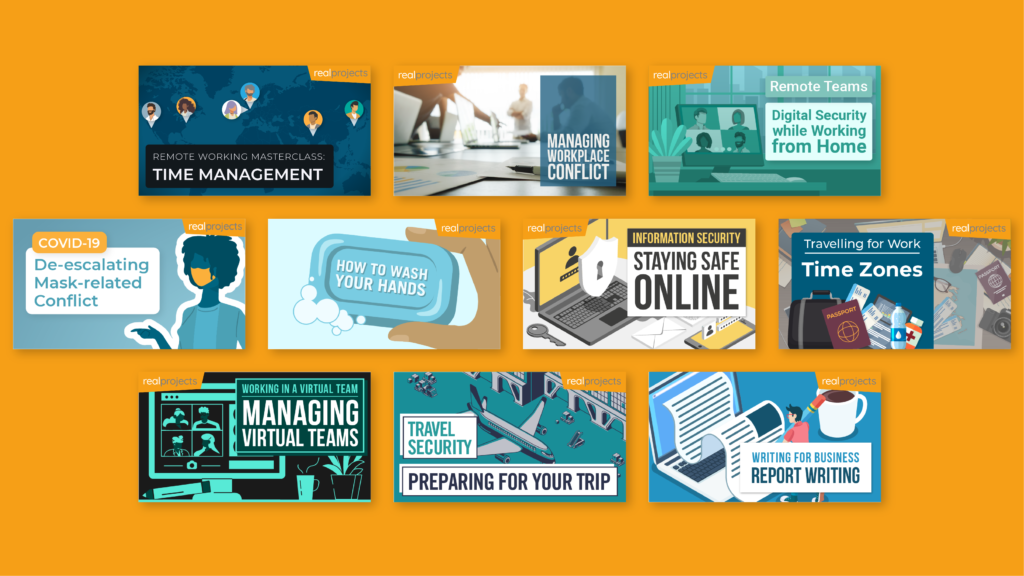
Custom development takes time and can be expensive. An off the shelf library provides significant cost savings, and you can deploy a huge content library in hours, often minutes. There’s a wide range of content libraries available, including specific sector libraries like the AnalyiSport Data Football Library.
If you’re looking to deploy elearning within your organisation, off the shelf courses can be an excellent part of your overall learning strategy, letting you get content out to your employees quickly and effectively without needing to build your own courses.
Courses have often already been used by a number of customers and have been through a rigorous testing and QA process, something you’ll benefit from. You’ll also be able to speak to existing customers and read reviews to see if a particular library is aligned with your own learning objectives.
I speak to people at all levels, L&D directors, finance directors, the people actually building the courses, and one thing that comes up again and again with off the shelf is speed. You can get ready-made courses and upload them to your LMS or LXP quickly, in a way you simply can’t with a custom course. They’re available almost immediately, which is incredibly useful when you’re covering common topics like compliance, cyber security, leadership, communication, wellbeing, data protection, and workplace skills.
You get the metadata, the thumbnails, the course files, and you can have them up and running straight away. There’s still work to do, mapping the content, marketing it internally, getting it out to your teams, but all of that is still far faster than waiting for a course to be built from scratch.
Cost Effectiveness
Off the shelf courses eliminate the need for content creation, instructional design, and interactive development. That’s a significant advantage if you’re at the start of the process.
You may have a specific requirement that’s unique to your business that a content library doesn’t cover, but off the shelf courses will often cover the vast majority of your content requirements. Using off the shelf courses can also help if you’re working with a reduced training budget and need to allocate funding to other areas of the business.
Custom elearning can be expensive. You’re paying for design, writing, development, testing, reviews, and updates. Off the shelf courses spread that cost across many customers, which is usually why they’re far more affordable. In terms of cost per course, per person, across your organisation, you’re typically paying a very low price for a lot of content. You don’t need to use all of it, but even so, when you look at the number of courses actually used, it still works out well.
Content Expertise
Off the shelf courses are often created using content from subject matter experts. This can give you access to new content areas and high quality content in sectors you might not have covered before.
Using off the shelf content also lets you access content areas that might be too expensive in a custom project, the off the shelf course can be a cost effective way to access new expert content.
Quality Assurance
Developing custom elearning is expensive and time consuming. One of the overlooked parts of the process is quality assurance, reviewing each stage of development takes time, not just from the development team, but from your own internal team checking the content, graphics, interactions, and final product.
Off the shelf courses have already been reviewed and checked. They’ve also been used by other customers, and you benefit from that. Reliable suppliers will have a development process that reduces the number of errors you’re likely to encounter. There’s no guarantee any course will be 100% error free, but the advantage of off the shelf, and of a course library, is that issues are often identified and resolved quickly. There will be multiple customers using the course, and the supplier will want to get the issue resolved and back on the platform fast.
Lower development costs compared to custom development
Custom development involves a highly skilled team: developers, writers, graphic designers, programmers, instructional designers, animators, and more. Using off the shelf courses reduces the costs associated with all of that.
It also reduces the time and resources needed to get elearning courses into your organisation, taking pressure off your elearning team and letting them focus on the projects that genuinely need their attention. If you have a team creating content, they can be working on company-specific projects rather than content you can easily buy off the shelf.
There’s a view of L&D as the order-taker: someone asks for training, L&D delivers it. But L&D teams don’t just want to take the order, they want to look at the actual problem.

I’ve worked as a business improvement manager, and one of the things I’d always do is go back and look at what the real issue is. A good example: if you’re constantly getting support tickets about printers, you don’t want to keep fixing printers one by one. Maybe there’s an issue with a particular printer. Does it need replacing? What’s the root cause? The same applies to software, and it applies to training requests too.
L&D teams are often asked to support lots of business needs at once. Once you’ve done that work to understand where the actual requirement sits, off the shelf elearning gives you a way to respond quickly without building each course internally. It won’t solve everything 100%, but then custom doesn’t either, I’ve worked on custom projects where we got to review 25 and it had taken months and months to finish. Off the shelf releases the pressure on L&D teams, and that’s worth factoring into your strategy.
Time Efficiency
Off the shelf courses allow for quick implementation across your organisation. Whether or not you have an LMS or LXP, you can be up and running in hours, often minutes. Providers like OpenSesame give you access to off the shelf courses directly via their website, so you don’t even need an LMS or LXP to start deploying pre-built courses in minutes.
If you do have an LMS or LXP, implementation is relatively easy. At Real Projects we provide an easy download with the files you need to integrate into your platform, so you can deploy courses across your employees quickly and easily.

Off the shelf courses avoid the lengthy development cycles that often come with custom elearning projects. You select the courses you need and deploy them once you’ve agreed terms with your supplier.
Custom always solves a specific need, and there will be requirements off the shelf simply doesn’t cover. But what you’ll often find is that off the shelf can solve that problem in the interim, while your custom course is being built. This is where off the shelf is brilliant for speed, it buys you time without leaving a gap, especially when you’ve got an urgent training need or gaps to fill in your content library.
Scale
Whether you’re new to elearning or already have courses in place, off the shelf courses can cater to organisations of any size. You can add just a few courses, or scale up to several thousand. Some basic customisation is often available too.
Even organisations that are quite mature in their L&D function might not have much content to share with employees. Off the shelf content lets you add courses to your LMS or LXP and roll them out across teams, regions, departments, and locations quickly, effectively, and cost-effectively. If your organisation is spread across multiple locations, being able to scale and deploy quickly across all of them is a huge benefit, and it supports everything else your L&D function is doing in those locations: the face-to-face work, the in-work activity, all of it.
Content and topic areas covered
There’s now a wide range of topic areas covered by off the shelf courses. You’ll find compliance, soft skills, and technical skills across most libraries, alongside more specialist content for sectors like football, oil and gas, manufacturing, and pharmaceuticals.
The main off the shelf providers also offer a roadmap, outlining upcoming courses for the year ahead so you can plan around what’s coming. A number of providers actively speak to customers about their needs and build that into the roadmap, so you can have a real say in what gets developed next. With thousands of courses available, it’s usually possible to find content that meets your requirements.
Return on investment (ROI)
Everybody’s looking for benefits, impact, ROI, behavioural change. Off the shelf courses are just one part of your L&D or learning strategy, but when you actually break down where the ROI comes from, it’s usually a combination of a few things working together.
The first is speed. The faster you can deploy training, the faster you respond to an urgent need, fill a gap in your content, or get ahead of a compliance deadline. That speed has a value of its own, it’s the cost of not waiting.
The second is cost structure. Off the shelf courses spread development cost across many customers, so you’re paying a low price per course, per person, for a lot of content. You don’t need to use all of it, but even when you look at how much actually gets used, it still represents strong value for what you’ve spent.
The third is what it does for your L&D team’s capacity. When off the shelf can handle the common, recurring training needs, your team isn’t constantly building from scratch to keep up with every request. That’s less pressure, less bottleneck, and a faster route to a solution when the business needs one. Courses are often aligned with organisational goals, but increasingly content is also provided to let learners develop on their own time, not just content tied directly to their job role.
Don’t Dismiss the Data
Something that’s often overlooked, or dismissed, is the learning data you get back. You’ll have read about completion rates being a vanity metric, and how little use there supposedly is in that data. But all data has a use, it depends how you use it, what you map it against, and what you integrate it with.
When delivered through an LMS or LXP, you can track completion, scores, progress, and engagement. Used as part of a dashboard alongside your other MIS information, that gives L&D teams genuinely useful data, and can help you get support in the other areas you need. It’s not about dismissing the data. It’s about using it in the right way, with the right people.
Conclusion
Off the shelf courses provide a cost effective way to deploy learning content quickly and effectively across your organisation. There’s a wide range of content available in multiple languages at various price points, and it can be deployed across various platforms.
The content can be up and running within hours, so you have the opportunity to plug any content gaps you have, or get an elearning content solution up and running without needing to start your own custom development team.
If you don’t have the technical infrastructure, cloud tools also give you instant access to content, along with the administration and reporting capabilities to manage it.
Frequently Asked Questions
What does off-the-shelf training mean?
Pre-made courses ready to deploy immediately. No development needed, you download and integrate into your LMS or platform, often live within minutes.
What are the advantages and disadvantages of eLearning?
Advantages: cost savings, fast deployment, scalable, expert content, quality assured. Disadvantages: less tailored to your specific needs, limited customisation, may not cover niche requirements.
What benefits do you get from eLearning?
Quick rollout, lower costs than custom development, access to expert-created content, proven quality, easy scaling across teams and locations, and it frees up your team for bespoke projects.
What is off-the-shelf curriculum?
A ready-made library of courses covering topics like compliance, soft skills, technical skills, and sector-specific content, available to deploy without custom development.
Scott Hewitt
Scott Hewitt is the founder of Real Projects, an off-the-shelf elearning content library trusted by organisations including HowNow, OpenSesame, Ticketmaster, and easyJet. He has built a library of over 800 courses across nine languages, with a focus on practical workplace training that’s ready to deploy on any major LMS.
Scott has spent over 25 years working in elearning as a buyer, supplier, and creator, and helps L&D teams understand where off-the-shelf content fits, where it doesn’t, and how to get genuine value from it.
 Connect on LinkedIn