Why Use Off-the-Shelf Elearning Content?
“What is it you do? Off the shelf elearning? Why would you use this?” I’ve had this conversation a lot. I’ve already written about the benefits of off the shelf elearning courses, where I covered speed, deployment, and the other factors that get into the detail. This article looks at the question from a slightly different angle: not just what the benefits are, but why and when you’d actually reach for off-the-shelf in the first place.
Off-the-Shelf or Custom: Which Is Right?
Often, off-the-shelf is the solution when custom isn’t. Custom is a great option when you have the budget and need something specific to your organisation, but custom takes time. I’ve worked on projects where the custom solution took months, and there was no way an off-the-shelf option could fill that gap. Why? Because the content was so specific to that company that nothing pre-built came close, and the development time was always going to be months, regardless.
That’s the honest answer to “when off-the-shelf doesn’t work.” But for most common training needs, that level of specificity simply isn’t there, and that’s where off-the-shelf earns its place.
When Off-the-Shelf Works Best
If you’re looking for content like cyber security and compliance, off-the-shelf is ideal. It supports more people, quickly and easily, and you don’t need to create every course yourself.
I’ve often had the conversation about whether “we could include our own logo.” Realistically, what’s the point? You add time and you add budget for something that doesn’t change how the training works. If you’re using off-the-shelf to get content out quickly, branding is one of the first places to think carefully about where your budget actually goes.

Course Libraries as Insurance
I’ve covered this in more detail in my guide to choosing an off-the-shelf elearning content provider, but it’s worth a mention here too. When you have a content library, you’ve got a whole host of courses, some of which you might not use straight away. That’s not wasted spend. Having those courses ready means you can deploy them later when the need arises, or use them to resolve a problem quickly if one comes up unexpectedly. Either way, the content is there when you need it.
Off-the-Shelf Elearning and AI
AI is everywhere now, and it’s changing how every sector works, including how people think about whether to use off-the-shelf content at all. I’m reading posts about courses built rapidly using AI tools, but speed of production isn’t the same as a full development process. Courses created this way aren’t always showing the responsiveness or accessibility that’s actually needed, and that’s before you even get to ROI.
There’s also a lot of criticism in the instructional design community about the cost of established development tools like Articulate. But AI tools aren’t necessarily the cost-saving option people assume. The AI market for course development still isn’t stable, and the pricing isn’t always what people think it is.

So why does off-the-shelf still have a place, and will it continue to? Cost per user stays low, and the content has already been tested, reviewed, and is ready to go. People value consistency and standardisation, and that holds true even within AI-driven and creative work, especially in specific sectors. Don’t underestimate that.
How Off-the-Shelf Supports Your L&D Team
Internal teams are under pressure. Often it’s just one person, or a very small team, and they’re not only working on elearning, they’re pushed to cover other content needs too. If you have a library of off-the-shelf content, that team can focus on other projects, and you’ve freed up real time. This is often overlooked when people look at ready-made content. You also don’t need to bring in subject matter experts every time you need a new course.
Types of Off-the-Shelf Elearning Content
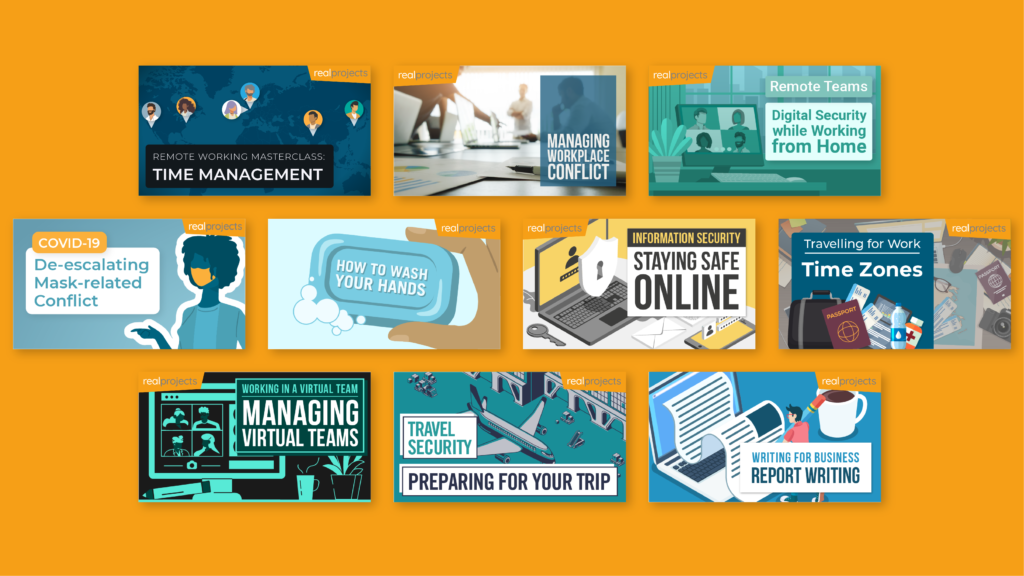
The types of off-the-shelf content available have grown and varied hugely over the last few years. Courses are usually split into modules to help with comprehension, and today the content itself might include:
- Video content
- Audio content and tracks
- Interactive assessments and quizzes for on-the-spot learning checks
- Microlearning that splits content into small, easily digestible chunks
- Social learning resources such as discussion forums and shared content
The variety means there’s usually a format that suits both the topic and how your teams actually want to learn.
Learning Analytics
Off-the-shelf courses are often available in formats like SCORM or xAPI, which integrate with your LMS or LXP and give you learner analytics. The scope varies by course and provider, but it’s common to access data like completion rates, retention, and engagement.

This lets you review how effective the courses are, and analyse completion levels and other metrics where it matters. Used alongside feedback from learners themselves, this kind of data can help you improve how content is deployed and supported over time.
Customisation and Localisation
Off-the-shelf courses need no customisation, that’s part of the appeal, you can be up and running straight away. But if you do need customisation or localisation, options are usually available. Some suppliers will adjust content or support specific language requirements. At Real Projects we’ve supported a number of clients with specific language needs for our off-the-shelf courses.
If you’re looking at customisation, remember it takes time. You’ll need to budget for the development, testing, and publishing time involved, on top of the course itself.
Frequently Asked Questions
Why use off-the-shelf elearning instead of building your own?
Off-the-shelf is faster to deploy, costs less per learner, and doesn’t require a development team or subject matter experts for every topic. It works best for common training needs like compliance, cyber security, and leadership, where the core content is broadly the same across organisations.
When is off-the-shelf elearning not the right option?
When the content is highly specific to your organisation, its processes, culture, or internal systems, custom development is likely a better fit. Off-the-shelf works for shared knowledge; custom works for unique requirements.
Can off-the-shelf elearning be customised?
Some providers allow limited customisation such as branding or language localisation, but it takes time and budget. Think carefully about whether customisation adds enough value to justify the cost, particularly for something like adding a logo.
Does off-the-shelf elearning work with any LMS?
Most off-the-shelf courses are available in SCORM or xAPI formats, which are compatible with the vast majority of LMS and LXP platforms. If you don’t have a platform, providers like OpenSesame also offer hosted access directly.
Scott Hewitt
Scott Hewitt is the founder of Real Projects, an off-the-shelf elearning content library trusted by organisations including HowNow, OpenSesame, Ticketmaster, and easyJet. He has built a library of over 800 courses across nine languages, with a focus on practical workplace training that’s ready to deploy on any major LMS.
Scott has spent over 25 years working in elearning as a buyer, supplier, and creator, and regularly speaks with L&D teams about where off-the-shelf content fits into their wider learning strategy.
 Connect on LinkedIn